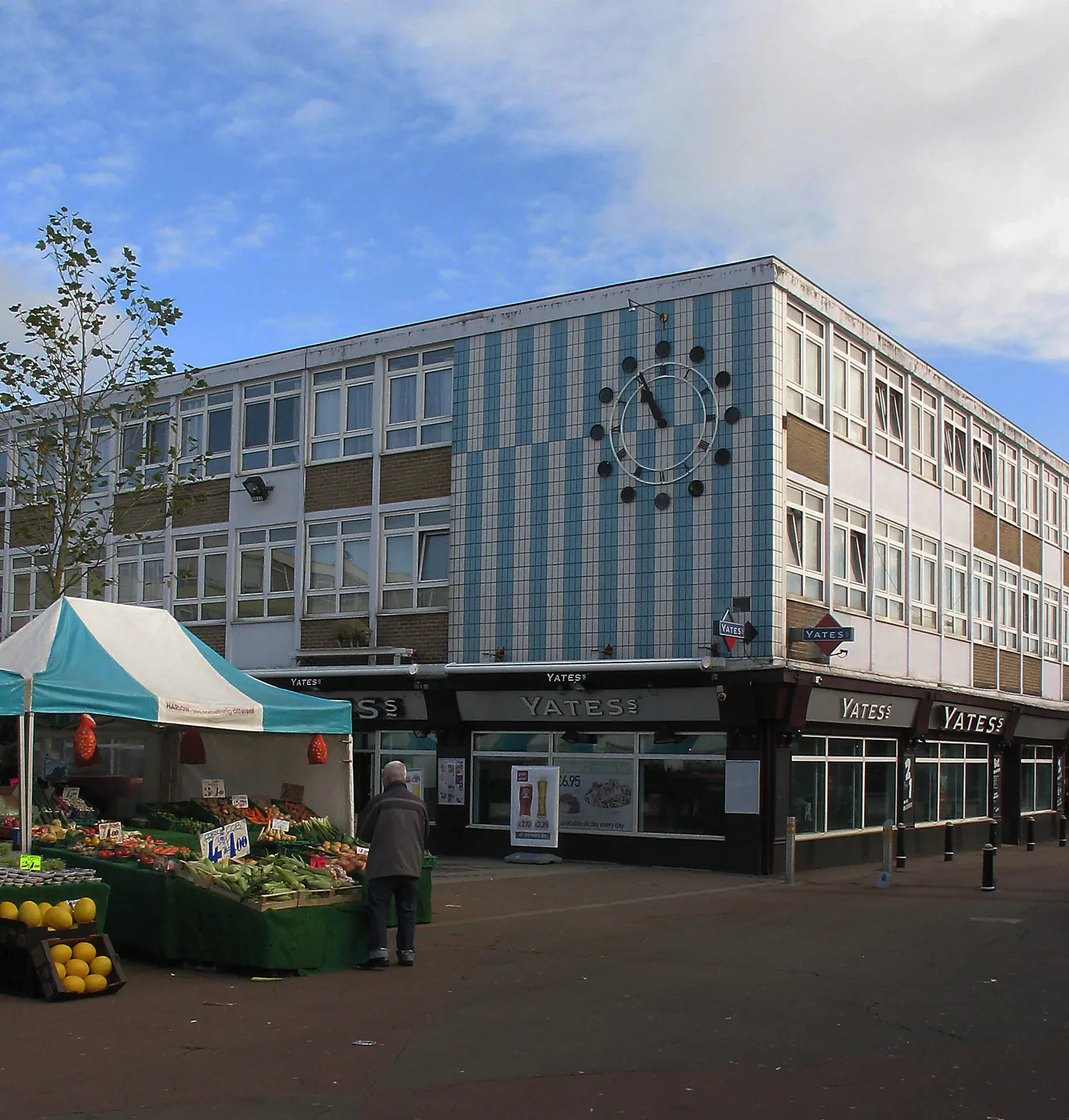

Harlow Council wants to consult on a town-wide PSPO. Its own shortlist runs to 28 possible bans, from dogs off leads to balaclavas, with fines up to £1,000.
Harlow Council wants to ask residents whether anti-social behaviour rules that currently apply only in the town centre should apply across the whole town.
The Harlow PSPO question reaches Cabinet on Monday 14 September at 7pm, which is asked to authorise that consultation. The report going before it carries an appendix listing 28 possible restrictions, benchmarked from other councils in England, that could be put to residents.
Nothing is being banned on Monday. The council is explicit that the list is a prompt for discussion, not a proposal. But it is the clearest published sign yet of what a Harlow-wide order might contain.
What is being decided
Harlow already has a Town Centre Public Space Protection Order. The report says the evidence gathered by the council and its partners “indicates that anti-social behaviour issues are not confined to the town centre and are impacting communities across a wider geographical area”.
The single recommendation to Cabinet is to authorise consultation on “the potential introduction of one or more Public Space Protection Orders (PSPOs) across Harlow”, under the Anti-Social Behaviour, Crime and Policing Act 2014.
Two things follow if it is approved:
- A statutory consultation with Essex Police, the Police, Fire and Crime Commissioner, landowners and occupiers, community representatives and Essex County Council.
- Any new order would replace the existing Town Centre PSPO, not sit alongside it.
The item is a key decision affecting all wards, on the Leader’s Register as reference I020127. No consultation dates have been published yet.
The 28 measures on the list
The appendix gives each measure an indicative red, amber or green rating for how straightforward it would be to justify legally. Green means it may be easier to justify if local evidence supports it. Red means it may be difficult to justify without a stronger evidence base.
Rated green, and proposed town wide or town centre wide:
- aggressive or persistent begging
- drinking alcohol where it is linked to anti-social behaviour
- using illegal drugs or psychoactive substances in public
- intimidating groups causing harassment, alarm or distress
- threatening, abusive or disorderly behaviour
- public urination or defecation
- littering and interfering with bins
- dog fouling, and failing to remove dog waste immediately
Rated green, but only in defined places: keeping dogs on leads in designated areas, cycling in pedestrianised areas, e-bikes and e-scooters in pedestrianised areas, and excluding dogs from children’s play areas.
Rated amber, meaning the council thinks they would need more targeted evidence or careful drafting:
- spitting in public
- anti-social use of mopeds and motorcycles
- obstructing shop or business entrances
- amplified music causing nuisance
- smoking or vaping in children’s play areas
- lighting fires or barbecues in prohibited areas
- fireworks causing nuisance or distress
- feeding pigeons or vermin
- vehicle-related nuisance, such as racing, revving or congregating
- failing to control dogs in designated public spaces
- a limit on how many dogs one person can walk at once
- accessing or remaining on rooftops or restricted structures
- face coverings such as balaclavas and ski masks used to conceal identity while engaging in anti-social behaviour or crime
On the face coverings measure, the appendix notes that “many places have now adopted or consulted on similar measures”, but says it would still need careful drafting, clear exemptions and local evidence.
Rated red, and the two the council itself flags as hardest to justify:
- possession or use of catapults in designated locations
- a general prohibition on loitering, which the appendix says would be “more difficult to justify unless reframed around specific behaviour causing harassment, alarm, distress, nuisance or obstruction”
The report is careful about this list. It says plainly that “the inclusion of a measure within Appendix A does not represent an endorsement or recommendation by the council that it should be introduced in Harlow”.
What a breach would mean
Breaching a PSPO is a criminal offence. The report sets out the consequences:
- a Fixed Penalty Notice, or prosecution in the magistrates’ court
- a fine on conviction of up to £1,000
- an order lasting a maximum of three years, extendable in further periods of up to three years
Who can enforce it would also widen. At present, anti-social behaviour enforcement sits with specialist officers. The report says that under the council’s “emerging neighbourhood operating model”, a wider range of authorised council officers would be able to investigate breaches and issue fixed penalty notices, alongside Essex Police and officers accredited under the Essex Police Accreditation Scheme.
Why town wide rather than a bigger town centre order
The report sets out three options it considered and rejected two of them.
Doing nothing was rejected because, it says, “evidence demonstrates that reported anti-social behaviour is increasing”. Relying only on existing powers, such as Community Protection Notices and dispersal powers, was not ruled out but is what the consultation is meant to test.
The third option, simply adding restrictions to the existing town centre order, was rejected on displacement grounds. The report warns that tightening the town centre alone “could simply displace the behaviour to neighbouring locations where no equivalent restrictions are currently in place”, with “unintended consequences for surrounding residential, commercial or public spaces”.
One further item may join the list. On 14 August 2026 the Secretary of State for Housing, Communities and Local Government wrote to councils about the increased risk of wildfires and encouraged them to use PSPOs to restrict disposable barbecues and outdoor cooking equipment. The report says that if Cabinet approves the recommendation, those matters will be considered as part of the consultation.
The council’s own warnings
Three risks are set out in the report, and they are worth reading alongside the list of measures.
The first is that residents or community groups may see the restrictions as “disproportionate or unnecessary”. The second is legal challenge, if the council cannot show the statutory tests were met or that it gave proper regard to the Human Rights Act 1998 and the Equality Act 2010. The third is that a PSPO without enough enforcement capacity behind it would “undermine public confidence”.
There is also a line in the background section that sets a limit on how the powers should be used. It says it is important that PSPOs “are not seen to be targeting the behaviour of children and young people where there is a lack of tolerance and understanding by local people”.
Essex Police and the Office of the Police, Fire and Crime Commissioner have both expressed support for consulting, according to the report.
There are no direct financial implications at this stage. Consultation costs are to be met from existing budgets. The cost of signage, monitoring and enforcement would come back to Cabinet in a later report if any order is proposed.
What it means for you
- Nothing changes on Monday. Cabinet is being asked only to authorise a consultation. Any actual order needs a second report, a second decision and a full Equality Impact Assessment.
- If a Harlow-wide order is made, it replaces the town centre one. Restrictions you are used to in the town centre could apply on your street instead, or could change.
- Dog owners have the most at stake. Six of the 28 measures involve dogs: fouling, removing waste immediately, leads in designated areas, exclusion from play areas, control in designated spaces, and a cap on the number walked at once.
- The consultation is where the evidence comes from. The council says a measure can only be adopted where local evidence shows persistent or continuing behaviour. If you have experienced a problem, the consultation response is the record that counts.
- You can watch it happen. The meeting is at 7pm on Monday in the Council Chamber at the Civic Centre, and it is webcast live.
- Consultation dates have not been set. We will report them when the council publishes them.
We track council decisions and planning through our Harlow planning news page, and the practical stuff, from bin collection days to parking in Harlow, is on our local information pages.
Sources
- Harlow Council, Cabinet report: Public Space Protection Order Consultation, 14 September 2026 for the recommendation, the Leader’s Register reference I020127, the existing Town Centre PSPO, the replacement of that order, the £1,000 maximum fine and three year duration, the widened enforcement under the neighbourhood operating model, the three options considered, the 14 August 2026 letter from the Secretary of State on wildfires, the risks, the Public Sector Equality Duty position and the financial implications.
- Harlow Council, Appendix A: Measures for PSPO consultation for the full list of 28 potential measures, their indicative scope and their red, amber and green ratings.
- Harlow Council, Cabinet agenda, Monday 14 September 2026 for the meeting date, time and venue.
Have your say